 Legacy of Love counselors hear this question often — from clients who are curious, from those who have always felt strongly about contributing to medicine, and from families who want to understand all of their options. “Can I donate my body to science? And what exactly happens if I do?”
The answer is yes — and it is a genuinely meaningful choice. Whole body donation is one of the most direct legacies a person can leave in medicine. The doctors who will save lives next year, the surgical techniques being perfected right now, the medical devices being refined for the next generation of patients — they all depend in part on people who chose, while they were still here, to give this gift.
Here is a complete, honest guide to what whole body donation involves — including what it costs, what can go wrong in the process, what your family should plan for, and how to make this choice a documented part of your personal funeral pre-plan.
Whole body donation — also called anatomical donation or body bequest — is the voluntary donation of your entire body to a medical school, research institution, or accredited tissue organization for use in education, training, and scientific research. After the body has served its purpose — which may take several months to a few years — it is cremated and the remains are typically returned to the family.
Unlike organ donation, which happens immediately after death and is focused on transplantation, whole body donation is not a medical emergency. The body is used over time, for purposes ranging from medical student education to surgical skills training to pharmaceutical and device research.
The decision must be made in advance — by the individual, while of sound mind. Families cannot authorize whole body donation on someone else’s behalf after the person has passed. This is one of the most important reasons to document this preference clearly and early.
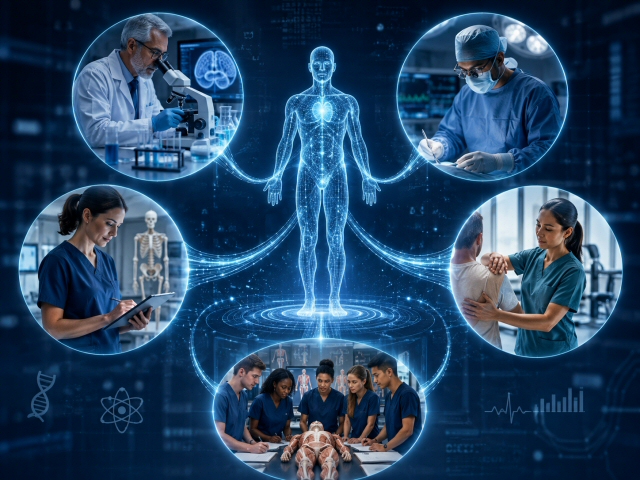
Whole body donation touches virtually every corner of medicine and healthcare. The fields that directly depend on donated human remains include:
Medical, dental & nursing student education
Surgical skills training & technique refinement
Anatomical & pathological research
Medical device testing & development
Pharmaceutical & clinical research
Physical therapy & rehabilitation training
Put simply: every surgeon who has performed a complex procedure, every medical student who learned anatomy, every physical therapist who understands the human body — has benefited from people who made this choice before them.
People join the Science Care body donation registry each year — a number that reflects the growing awareness of whole body donation as a meaningful end-of-life option
Science Care, 2025
Understanding what actually happens makes the decision easier to evaluate — and easier to explain to your family.
You register in advance with your chosen donation program — a medical school, university, or accredited tissue organization. This involves completing a registration form, signing consent documents, and, in most cases, receiving a donor card and registration confirmation to keep with your important documents.
Your family contacts the donation program immediately — typically within hours of death. This is time-sensitive. The program arranges transportation of the body from the place of death to their facility, usually within 24–48 hours. This is why having your registration documents accessible and your family informed of your wishes is essential.
The program reviews the donor’s medical history and physical condition to confirm the body is suitable for their research and education needs. Not every donation is accepted — we cover the most common disqualifying conditions below.
If accepted, the body is prepared and placed with a medical school, research institution, surgical training program, or other partner. Your body may support a single study or be used across multiple programs sequentially, depending on the organization.
The body is used for its intended educational or research purpose. The timeline varies — medical school anatomy programs typically use a body over the course of a full academic year; surgical training programs may use a body for a shorter, intensive period.
After the body has completed its service, it is transported to a licensed crematory for cremation. Cremated remains are typically returned to the family within one to three years of donation, unless the family has requested otherwise. Some programs hold an annual memorial service to honor donors.
For many families, one of the most meaningful aspects of whole body donation is its financial impact — or more precisely, its near-complete lack of cost to the family.
Most reputable donation programs cover:
A traditional funeral with burial costs a median of $8,300 before cemetery fees, according to the NFDA. Even a direct cremation averages $2,202 nationally. For families navigating grief on top of financial stress, the elimination of these costs through body donation can be genuinely significant.
While the core costs of whole body donation are typically covered by the program, families should plan for a few potential additional expenses. Some administrative fees — death certificate filings, initial transportation logistics — may not be fully covered depending on the program and geographic location. Costs can range from a few hundred dollars to a few thousand in some cases, particularly if the donation site is located at a distance.
Additionally, if you want to hold a memorial service or celebration of life — and many families do, whether shortly after death or when the cremated remains are returned — that is a separate expense the family arranges. A meaningful gathering can be modest or elaborate; what matters is that it reflects the person being honored. Legacy of Love counselors can help you think through and document your memorial preferences as part of your pre-plan, even if whole body donation is your chosen disposition method.
It is important to understand that not every body is accepted. Donation programs must ensure the bodies they receive are suitable for their educational and research purposes. Common disqualifying factors include:
This last point is one of the most important practical considerations: program capacity rejection is a real possibility. It does not mean you did anything wrong or that your wish was not honored — it simply means the program could not accommodate your body at that time. This is why families should always have a secondary disposition plan in place — and why documenting your backup preference in your Legacy of Love plan is worth doing alongside your donation registration.
Organ donation — registering as an organ donor through your state’s motor vehicle system or donor registry — involves the transplantation of viable organs (heart, kidneys, liver, lungs, and others) to living recipients immediately after death. It is one of the most life-saving gifts a person can give, and it is entirely separate from whole body donation.
In most cases, you cannot do both. Whole body donation programs generally require the body to be intact. If you are an organ donor and organs are harvested at time of death, the body is typically no longer suitable for most whole body donation programs. If whole body donation is your priority, you should review your organ donor registration and understand that the two are generally incompatible in practice.
Both are extraordinary acts of generosity. The right choice depends on your values and priorities. If you are unsure which matters more to you, your Legacy of Love counselor or your physician can help you think it through.
Choosing whole body donation is a deeply personal decision — and one that affects your family in practical ways. Here is what to discuss and document:
The first step is choosing a program. There are two main categories of donation programs:
Medical schools and universities — most major medical schools operate their own body donation programs for anatomical education. Contact the anatomy department of your nearest medical school or university with a medical program to inquire about registration. Each school has its own criteria, geographic catchment area, and registration process.
Accredited tissue organizations — private organizations that partner with a wider range of research and educational institutions. Two of the most recognized:
When evaluating any program, look for accreditation from the American Association of Tissue Banks (AATB) or the National Disease Research Interchange (NDRI). These accreditations ensure the program follows ethical standards for the handling, use, and return of donated remains.
Documenting your choice with Legacy of Love: When you work with a Legacy of Love counselor to create your pre-plan, you can document whole body donation as your intended disposition method — including the specific program you have registered with, the contact information, your donor registration number, and your preferences for the memorial service and the return of cremated remains. Your counselor can also help you identify programs in your area if you haven’t yet registered, and can document your backup disposition preference in case primary donation is not possible.
Whether you choose whole body donation, natural burial, cremation, or any other option — Legacy of Love helps you document and share your preferences for FREE. Your family will know exactly what you wanted and how to honor it.
Start My Free Funeral Plan →Donating your body to science is a generous, forward-looking choice — one that places your final act squarely in service of others. Every medical student who learns from you, every surgeon who refines a technique because of you, every patient helped by research that depended on your gift: that is a legacy measured not in headstones but in lives.
It is also a choice that requires planning — not just registration with a program, but clear communication with your family, a documented backup plan, and a clear record of your memorial preferences. Legacy of Love can help you put all of that in place, completely free of charge.
For more on related options, see our articles on Burial or Cremation: Comparing the Process, Costs, and What Could Influence Your Choice and What Is a Green Burial?
Start Your Free Funeral Plan Here » or call us at 833-888-0355.
SOURCES
* Legacy of Love is not affiliated with Science Care, United Tissue Network, or any specific body donation program. Program availability, cost coverage, and acceptance criteria vary by organization and geographic location. Families should contact donation programs directly to confirm current terms and registration requirements. Organ donation and whole body donation programs have distinct and separate processes; individuals should review their existing organ donor registration in light of whole body donation plans.