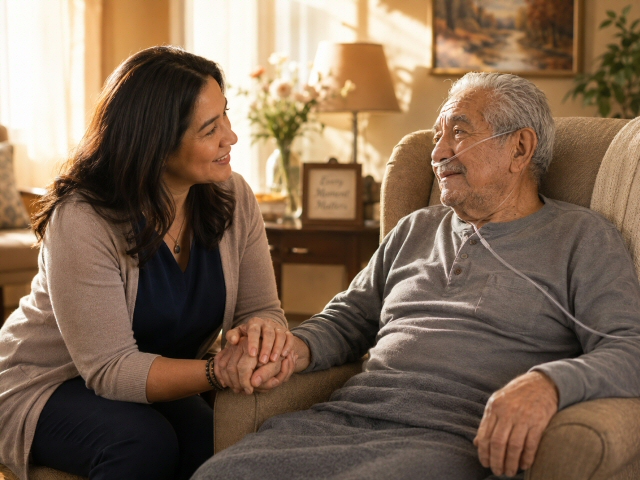
 Not so long ago, death was handled differently. In many communities and cultures, it was a family matter — something that happened at home, surrounded by people who knew the dying person well, who understood their wishes, who sat with them through the final hours. Over the course of the twentieth century, that changed. Dying became increasingly medicalized, moved into hospitals and nursing facilities, managed by professionals operating within systems built for treatment rather than comfort.
Something has been lost in that shift. And a growing number of people — as care providers, as advocates, and as people navigating the dying of those they love — are working to reclaim it.
The end-of-life doula movement is part of that reclamation. It is practical and personal, professional and deeply human. And for anyone thinking about how to face the end of life — their own or that of someone they love — it is worth understanding.
A death doula — also called an end-of-life doula, a death midwife, or an end-of-life companion — is a trained, non-medical professional who provides emotional, practical, and sometimes spiritual support to dying individuals and their families. The word “doula” derives from the Greek, and its Anglophone use carries a gentle meaning: a person who serves, who accompanies, who bears witness.
The birth doula role — which emerged in the United States in the 1970s as a response to the concern that birth had become overly medicalized — was the original model. Henry Fersko-Weiss, a hospice social worker who would go on to found the modern death doula movement, recognized a parallel. Dying, he believed, was a kind of labor too. A birth plan could be translated into a death plan.
“Our collective fear of death is so strong, our defenses so well maintained, that when a person receives a terminal diagnosis, he or she is totally unprepared and often hides within a fragile bubble of hope.”
The doula role, at its core, is an act of accompaniment. It is not a medical role — death doulas do not provide clinical care, administer medication, or replace nurses or physicians. What they provide is presence, guidance, and advocacy through one of the most significant transitions a human being makes.
The specific services a death doula offers vary by individual and training, but most end-of-life doulas work across several interrelated areas:
Helping clients articulate their preferences regarding medical treatment, place of death, funeral wishes, and legacy — and documenting those preferences in a form their family and medical team can follow.
Sitting with clients as they process fear, grief, unfinished business, and questions about meaning. This is neither therapy nor chaplaincy — it is compassionate, non-judgmental presence.
Helping clients and families navigate complex medical systems, communicate wishes to healthcare providers, and ensure the dying person’s preferences are honored even when institutions push in other directions.
Preparing family members for what the dying process looks like — its stages, its sounds, its physical changes — so they are less frightened and more able to be present.
Being physically present in the final hours or days of life, creating a peaceful environment and holding space for the family in the room — so no one has to navigate those moments alone.
Helping clients record their stories, create memory projects, write letters to loved ones, or document meaningful parts of their lives to leave behind for those who will survive them.
Continuing to support family members after the death — some doulas offer bereavement sessions, grief rituals, or simply a continued presence during early mourning.
Assisting with practical funeral preparations, including helping the client document and communicate their wishes about what happens to their body and how they want to be remembered.
What unites all of these services is a single orientation: the death doula’s primary commitment is to the dying person and their family — to their comfort, their dignity, and their autonomy. As The New Yorker described it, the role is “an act of accompaniment toward the unknown.”
The most common question people ask when they first encounter the death doula concept is: how is this different from hospice?
Hospice is a medical care model. It is provided by a clinical team — nurses, physicians, social workers, chaplains — and covered by Medicare and most insurance plans for patients with a terminal diagnosis and a life expectancy of six months or less. Hospice focuses primarily on medical comfort: pain management, symptom control, and medical support for the dying person and family.
Death doulas are non-medical and operate outside the insurance system. They are not bound by the eligibility requirements of hospice. A death doula can be engaged by anyone — someone recently diagnosed with a serious illness, someone who wants to start planning long before any medical need arises, someone caring for a parent in decline, or a family processing a sudden loss. The doula’s focus is not clinical management but human presence and holistic support.
The two roles are not in competition — they are complementary. Many hospice patients have death doulas in addition to their hospice team. While 80% of Americans say they would prefer to die at home, many end up in hospitals or nursing facilities where staff, however dedicated, are not equipped to provide the kind of sustained personal companionship and emotional support a doula offers. Death doulas fill that gap.
People globally who have trained as end-of-life doulas in the past decade alone — a field that barely existed before 2010
The New Yorker, “The Doulas Who Help Us Die,” August 2026
The growth of the death doula movement is not accidental. It reflects something shifting in the cultural conversation around death — a growing discomfort with the way modern medicine has made dying feel like a medical failure rather than a natural passage, and a corresponding desire to reclaim something more human.
The United States is also aging rapidly. The Baby Boomer generation — 73 million people born between 1946 and 1964 — is moving through its final decades. Their sheer scale is reshaping every institution it passes through, and end-of-life care is no exception. More families are navigating serious illness and death, and more are finding that the existing systems — hospitals, nursing homes, even hospice — do not fully meet their emotional and practical needs.
The “death positive” movement, popularized in part by organizations like the Order of the Good Death and events like Death Cafes — informal gatherings where strangers discuss mortality over tea — has helped normalize conversations that were once considered morbid. More people are willing to ask: what do I want? How do I want to go? Who do I want beside me?
Death doulas are, in many ways, the professional response to those questions.
Death doula services are not covered by Medicare, Medicaid, or standard health insurance. They are paid privately, and costs vary widely depending on the doula’s experience, the scope of services, and geographic location.
The lack of insurance coverage is a genuine barrier for many families. Organizations like INELDA (International End-of-Life Doula Association) and the National End-of-Life Doula Alliance (NEDA) are working to increase professional recognition and, eventually, reimbursement pathways. For now, families who want doula support should plan for an out-of-pocket expense and ask potential doulas directly about pricing flexibility.
The death doula field is growing rapidly, but it is not yet uniformly regulated. Training and certification standards vary across organizations, and there is no single national licensing body. When looking for a death doula, families should ask about training background, certification, references, and scope of services.
The two primary professional organizations with searchable directories are:
Hospice organizations, palliative care teams, and hospital social workers may also be able to provide referrals to local doulas working in your area.
One of the most consistent themes in the death doula movement is the importance of knowing your own wishes — and making sure the people around you know them too. Death doulas routinely help clients work through questions like: What kind of service do you want? Where do you want to be buried, cremated, or returned to the earth? What matters most to you about how your life is honored?
These are precisely the questions that funeral pre-planning addresses. And for many clients, a death doula is one of the first people who invites them to sit with those questions seriously — not under crisis pressure, but while there is still time and clarity to answer thoughtfully.
Legacy of Love’s counselors share a foundational value with the death doula community: that the people who face these conversations with warmth, patience, and genuine human presence — rather than urgency or salesmanship — serve families best. Our counselors are not death doulas, and we are not a hospice or medical service. But the orientation is similar: meet people where they are, help them articulate what matters, and document it so the people they love are not left guessing.
Some Legacy of Love counselors may have connections to death doulas serving their local area. If you are working with a death doula and want to translate the wishes you have articulated together into a documented funeral pre-plan — stored securely in your My Final Wishes Binder and Online Legacy Vault — Legacy of Love can help you take that next step. The planning is completely free, with no obligation.
A death doula helps you face the end of life with presence and intention. A funeral pre-plan ensures that the wishes you’ve articulated are documented, stored safely, and accessible to your family when the time comes. The two are natural companions — different in their focus, shared in their respect for the person at the center.
For more on related end-of-life planning topics, see our articles on Celebration of Life vs. Funeral, What Is a Green Burial?, and our free Funeral Planning Checklist.
Whether you are working with a death doula or starting the conversation on your own, Legacy of Love can help you document your final wishes for FREE — with compassion and no pressure.
Start My Free Funeral Plan →The death doula movement is, at its heart, a reminder that dying is still part of living — and that it deserves the same care, intentionality, and human presence that we bring to any other major life passage. More than 10,000 people have answered that calling by training as end-of-life doulas. Millions more are quietly beginning to ask better questions about what they want at the end of their own lives.
If those questions have found you, we think that’s a good thing. And whenever you’re ready to start documenting your answers, Legacy of Love is here. Start Your Free Funeral Plan Here » or call us at 833-888-0355.
SOURCES
* Legacy of Love is not affiliated with INELDA, NEDA, or any individual death doula practice. Death doula services are not medical services and are not covered by Medicare, Medicaid, or standard health insurance. Cost ranges cited are approximate and vary by geographic region and individual provider.